
Molecular Stability of 4-Pro-MET Pellets
Why the Propionyloxy Ester Provides Superior Chemical Stability
4-Hydroxytryptaminen zoals 4-HO-MET hebben een houdbaarheidsoprobleem. Ze oxideren in lucht binnen dagen tot weken tot inactieve chinonproducten — zichtbaar aan een bruinkleuring. 4-PrO-MET lost dit op met twee mechanismen: de propionyloxy-beschermingsgroep op positie 4 blokkeert de oxidatieplaats. De fumaraat-zoutformulering verhoogt de chemische en fysische stabiliteit van de pelletmatrix. Hier de moleculaire grondslagen — en wat je bij opslag in acht moet nemen.
Inhoudsopgave
- Laden...
Het Oxidatieprobleem in 4-Hydroxy Tryptamines
De achilleshiel van alle 4-hydroxytryptaminen: de fenolische 4-hydroxy-groep (-OH) aan de indoolring is extreem oxidatiegevoelig. Luchtzuurstof, licht, vocht — elk van deze factoren start een oxidatiecascade via semichinon-radicalen naar chinonproducten. Bij psilocine (4-HO-DMT) is dit het duidelijkst zichtbaar: verse extracten zijn kleurloos. Na contact met lucht worden ze binnen minuten blauwgroen ("bluing reaction").
4-HO-MET (de actieve metaboliet van 4-PrO-MET) onderhevig is aan hetzelfde mechanisme. Voor onderzoek betekent dit: onbeschermde 4-hydroxytryptaminen verliezen na verloop van tijd aan potentie — en dat is van buitenaf niet altijd zichtbaar. HPLC-analyses van slecht opgeslagen monsters tonen significante inhoudsdalingen. Reproduceerbare resultaten? Onder deze omstandigheden nauwelijks mogelijk.
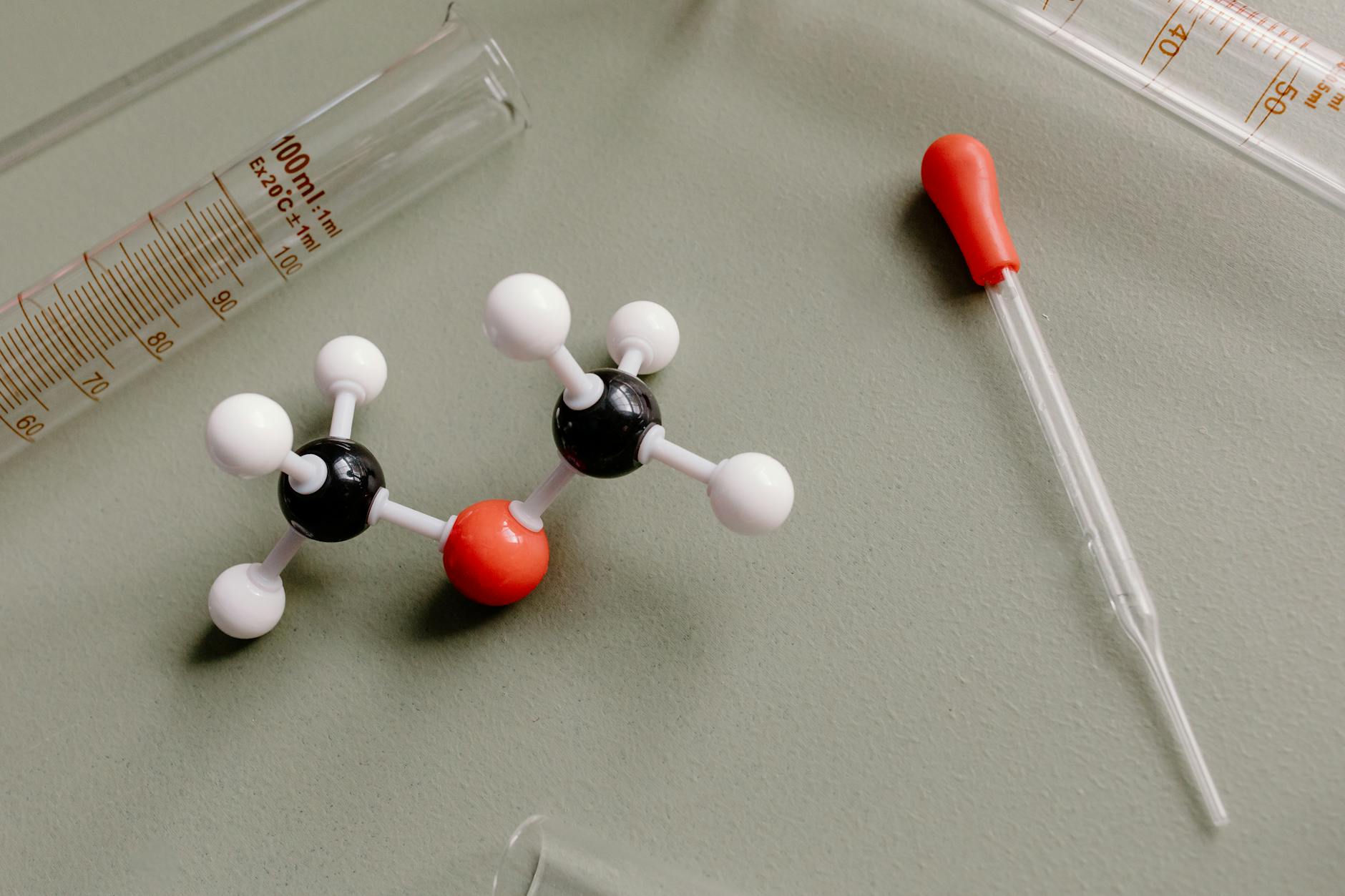
<p style='font-size:1.05rem;color:#444;line-height:1.8;'>De oplossing is chemisch elegant. De propionyloxy-groep (-O-CO-CH2-CH3) verestert de 4-hydroxypositie en blokkeert de oxidatieplaats fysiek. De zuurstof van de hydroxylgroep zit vast in de esterbinding — hij kan niet meer reageren met luchtzuurstof. Oxidatiecascade gestopt, direct aan de bron.</p><p style='font-size:1.05rem;color:#444;line-height:1.8;'>Het principe is bekend uit de farmacie: psilocybine beschermt dezelfde positie met een fosforyloxy-groep, 4-AcO-DMT met een acetyloxy-groep. De propionyloxy-groep van 4-PrO-MET zou ten opzichte van de kortere acetyloxy-groep een voordeel kunnen bieden: de grotere, meer hydrofobe estergroep vertraagt mogelijk de hydrolyse onder opslagomstandigheden (niet de enzymatische hydrolyse in het lichaam — die moet juist plaatsvinden). Directe vergelijkingsstudies ontbreken. Maar de chemische logica is duidelijk: grotere esters hydrolyseren in neutrale waterige oplossing langzamer dan kleinere.</p>
Three carbons vs. two. The propionyloxy ester in 4-Pro-MET has a longer acyl chain than the acetyloxy ester in 4-AcO-MET, and that extra methylene group (-CH2-) pulls its weight – slightly more steric shielding around the ester bond and a modest bump in hydrophobicity at the protected site. Both factors can slow environmental hydrolysis.
That said, no published head-to-head stability study exists for 4-Pro-MET vs. 4-AcO-MET. The advantage is theoretical, grounded in ester chemistry basics: longer chains resist hydrolysis a bit better than shorter ones in aqueous environments because of steric bulk and reduced water access to the carbonyl carbon. In pharmaceutical formulation, the practical difference tends to be modest – maybe 10-20% more shelf life under equivalent storage conditions.
De Rol van Fumaraatzout en Pelletcompressie
Tweede beschermlaag: de zoutvorm. 4-PrO-MET als vrije base? Een olieachtig, moeilijk hanteerbaar materiaal. Door reactie met barnsteenzuur (trans-buteendizuur) ontstaat een kristallijn fumaraat-zout met gedefinieerde fysische eigenschappen.
Voordelen van de fumaraat-zoutvorm
Kristalliniteit: Kristallijne zouten hebben een geordende moleculaire structuur. Minder aanvalsoppervlak voor afbaakreacties dan bij amorfe oliën. De moleculen pakken dichter, zuurstof en vocht dringen er moeilijker in.
Smeltpunt: Zouten smelten bij hogere temperaturen dan vrije basen — dit verhoogt de thermische stabiliteit. Bij kamertemperatuur blijft het zout vast en stabiel.
pH-buffering: Fumaarzuur als tegenion stabiliseert de pH-waarde in de pelletmatrix. Onder zure omstandigheden verloopt de ester-hydrolyse langzamer dan onder basische — een extra beschermingsmechanisme dat vaak over het hoofd wordt gezien.
Optimale Opslagomstandigheden
Dubbele beschermlaag ten spijt — drie degradatiewegen blijven relevant:
UV-licht: UV-straling wekt de indol-chromofoor op en veroorzaakt fotochemische afbaakreacties. Tryptamines absorberen UV-licht bij ca. 280–290 nm. Tegenmaatregel: ondoorzichtige containers of omwikkeling met aluminiumfolie.
Zuurstof: Ja, de propionyloxy-groep beschermt de hoofdoxidatieplaats. Maar andere posities aan de indoolring of de zijketen kunnen langzaam oxideren. Tegenmaatregel: luchtdichte verpakking, bij voorkeur onder stikstof of argon.
Vocht: Water versnelt de ester-hydrolyse en kan het fumaraat-zout destabiliseren. Hygroscopische vulstoffen in pellets nemen vocht op. Tegenmaatregel: silicagel-droogmiddel, droge opslag.
Juridische Kennisgeving
Dies ist ein Beispiel-Infotext. Hier können Sie wichtige Hinweise für Ihre Leser hinterlegen.
Order Stable 4-Pro-MET Pellets
Fumarate salt – Lab-tested – EU shipping
FAQ: 4-Pro-MET Pellet Stability
4-Pro-MET's propionyloxy ester group caps the reactive 4-hydroxy position, preventing atmospheric oxidation. 4-HO-MET's free hydroxyl group is highly susceptible to oxidative degradation, losing approximately 30-50% potency within weeks under ambient conditions.
Properly stored (cool, dry, dark, airtight), 4-Pro-MET pellets are expected to maintain potency for 12+ months at room temperature. Refrigeration at 2-8°C may extend this further. The combination of propionyloxy protection, fumarate salt form, and compressed tablet format provides multiple layers of stability.
Theoretically, the longer propionyloxy ester chain may provide marginally better stability than the shorter acetyloxy chain in 4-AcO-MET, due to increased steric shielding. However, no published comparative studies exist. The practical difference is likely modest – perhaps 10-20% extended shelf life.
Moisture is the primary degradation threat for ester prodrugs, as it promotes hydrolysis of the protective ester bond. Light (UV particularly) accelerates photolytic degradation of the indole ring. Heat increases the rate of all degradation reactions. Store pellets with desiccant in opaque, airtight containers.
Freezing is not recommended for pellets. Freeze-thaw cycles cause physical tablet damage (cracking, crumbling) due to moisture expansion and contraction, which increases surface area exposure and may accelerate subsequent degradation. Refrigeration at 2-8°C is the optimal cold storage option.
Aktuelle Beiträge
-

-

-

-
 26.06.2026
 -
x
Please sign in to write a comment.
Meer uit „Dosering & Microdosering“

Cognitieve verbetering door tryptamines 2026
10.06.2026
Tryptamines vs klassieke stimulantia: vergelijking
08.06.2026
4-Pro-MET pellets: precisie voor laboratoriumonderzoek
06.06.2026
Flowstates en cognitie: microdosering-onderzoek
04.06.2026
4-Pro-MET microdosering: ervaringen van onderzoekers
02.06.2026
Microdoseringprotocollen: Fadiman, Stamets en Nightcap
31.05.2026Nieuwste artikelen
4-Pro-MET vs 4-HO-MET: prodrug versus actief molecuul
02.07.2026Set en setting: kader voor veilig tryptamine-onderzoek
30.06.2026Research chemicals veilig bestellen: kwaliteitscriteria
28.06.2026Tryptamines bewaren: houdbaarheid en opslag
26.06.2026De propionyloxygroep: stabiliteitsvoordelen in tryptamine-chemie
24.06.2026